Lars Lang · 15 September 2026
How Automated Categorization Algorithms Are Transforming Content Organization in Digital Notebooks
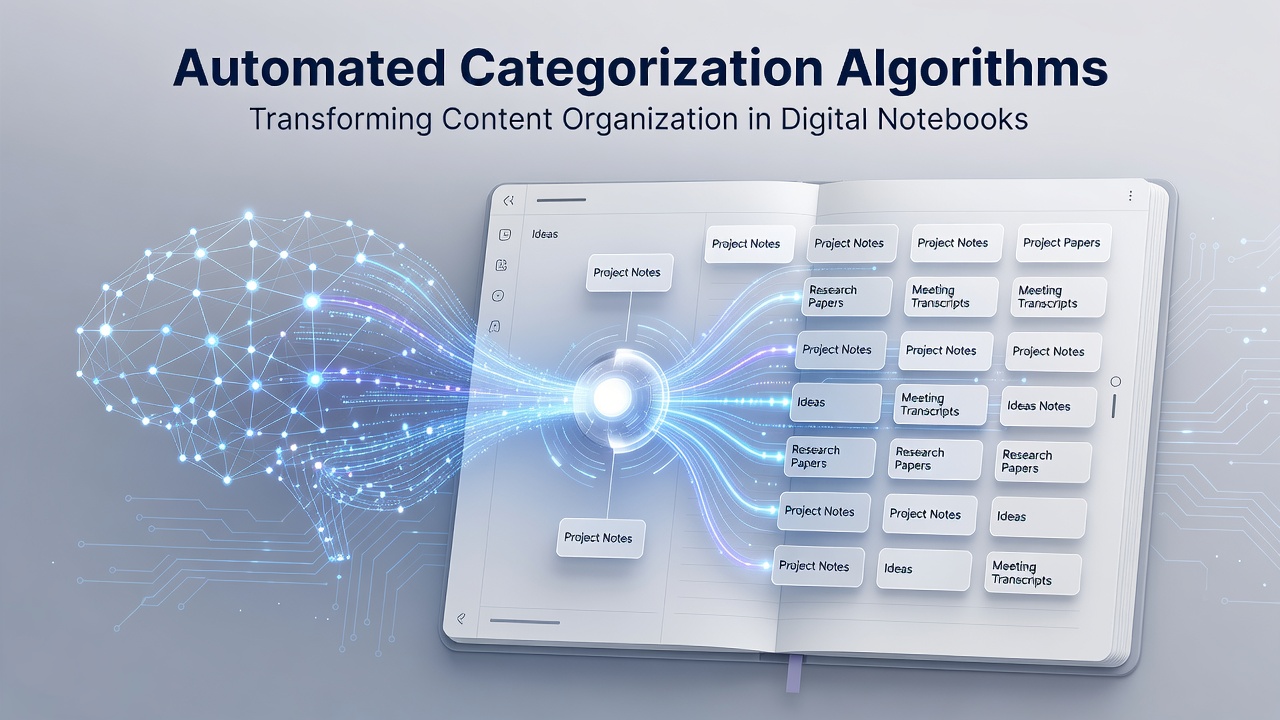
Automated categorization algorithms have reshaped how digital notebooks handle vast collections of user-generated content since their integration into mainstream platforms around 2020, and data from industry reports shows continued acceleration through September 2026 as machine learning models process notes in real time.
These systems rely on natural language processing combined with clustering techniques to assign tags, group related entries, and suggest organizational structures without manual input from users, while researchers at institutions across multiple continents track performance metrics that demonstrate measurable gains in retrieval speed and accuracy.
Core Mechanisms Behind Algorithmic Categorization
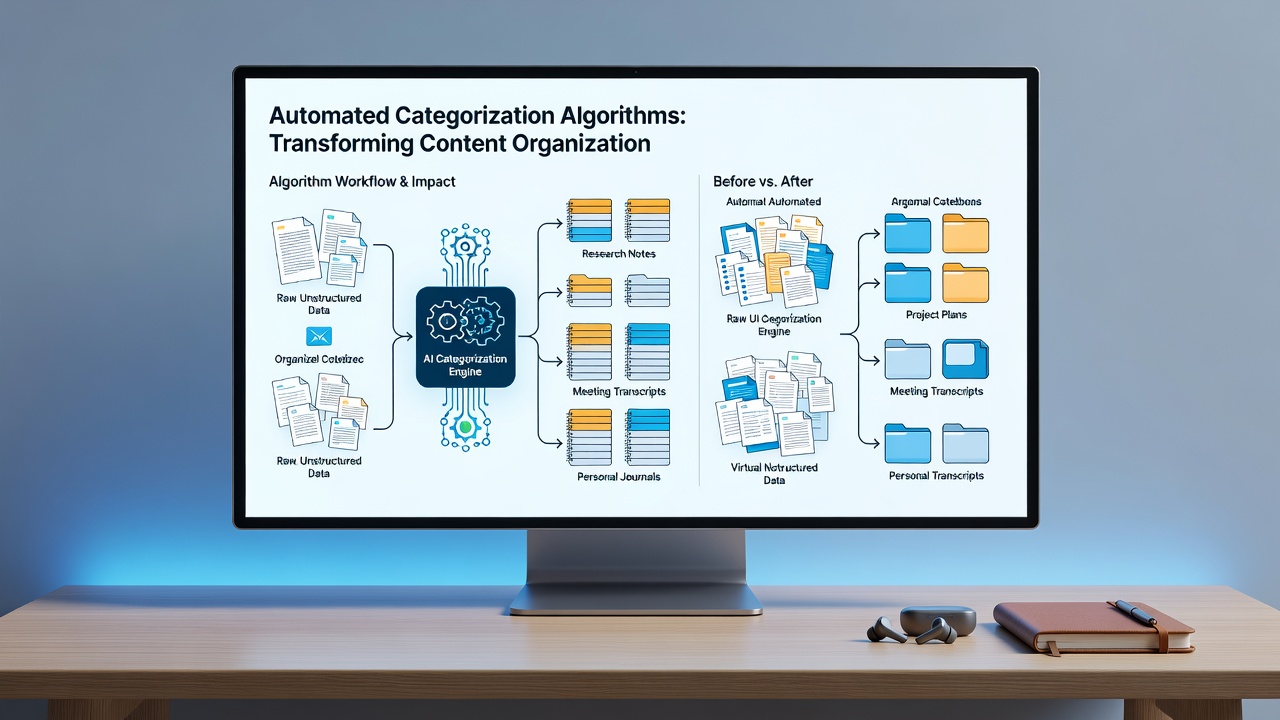
Algorithms typically begin by analyzing text through tokenization and semantic embedding models that convert words into numerical vectors, after which supervised learning layers classify content into predefined categories such as projects, references, or personal reflections, and unsupervised methods identify emergent clusters based on similarity scores calculated via cosine distance or hierarchical methods.
Training datasets often draw from anonymized note corpora collected under strict privacy protocols, and studies published by academic groups in Canada and Australia indicate that models achieve over 85 percent precision when distinguishing between professional and leisure topics once they incorporate user feedback loops that refine boundaries over successive interactions.
Impact on Daily Organization Workflows
Users of applications such as Evernote, OneNote, and Notion encounter automated suggestions that surface within seconds of note creation, while the same systems retroactively reorganize older entries when new context emerges from additional data points, and observers note that this dynamic adjustment reduces the time spent on manual filing by substantial margins according to usage analytics shared by platform developers.
Cross-referencing capabilities further allow algorithms to link notes across notebooks through entity recognition that identifies people, dates, and locations mentioned in separate documents, yet this process depends on consistent metadata standards that developers continue to harmonize with international data protection frameworks.
Evidence from Deployment Across Sectors
Academic environments have adopted these tools at scale, and figures from a University of Melbourne report reveal that students using algorithm-assisted notebooks completed literature reviews 30 percent faster on average compared with control groups relying on manual tagging alone, while corporate teams report similar efficiencies when onboarding new staff who inherit pre-categorized knowledge bases.
Government agencies in the European Union have tested comparable systems for internal documentation management, and compliance documentation from the European Commission highlights requirements that algorithms maintain audit trails for every automated decision to support transparency mandates that took effect in prior regulatory updates.
Challenges Encountered During Implementation
Accuracy declines occur when notes contain ambiguous language or domain-specific jargon that falls outside training distributions, and developers address these gaps through periodic model retraining cycles that incorporate fresh examples supplied by user communities, although performance varies depending on the diversity of source material available for each language and discipline.
Privacy considerations remain central because categorization processes require scanning content at scale, and platforms respond by offering on-device processing options that limit data transmission to cloud servers in regions governed by stricter data localization rules.
Future Trajectories Through 2026 and Beyond
Integration with multimodal inputs such as handwritten scans and voice transcripts continues to expand the reach of these algorithms, and ongoing research indicates that hybrid models combining large language models with graph-based representations will soon enable notebooks to surface contextual connections across multimedia entries with greater reliability.
Platform updates scheduled for release after September 2026 are expected to introduce collaborative categorization features that aggregate insights from multiple contributors while preserving individual privacy settings, and industry associations monitor these developments to establish voluntary guidelines that balance innovation with user control.
Conclusion
Automated categorization algorithms have established themselves as foundational components within digital notebook ecosystems by delivering consistent improvements in content discoverability and structural coherence, and continued refinement through feedback mechanisms alongside regulatory alignment ensures their role expands across professional and educational contexts without compromising established data handling standards.