Dana Patterson · 13 October 2026
How Natural Language Processing Refines Query Handling Across Intelligent Note Repositories for Distributed Teams
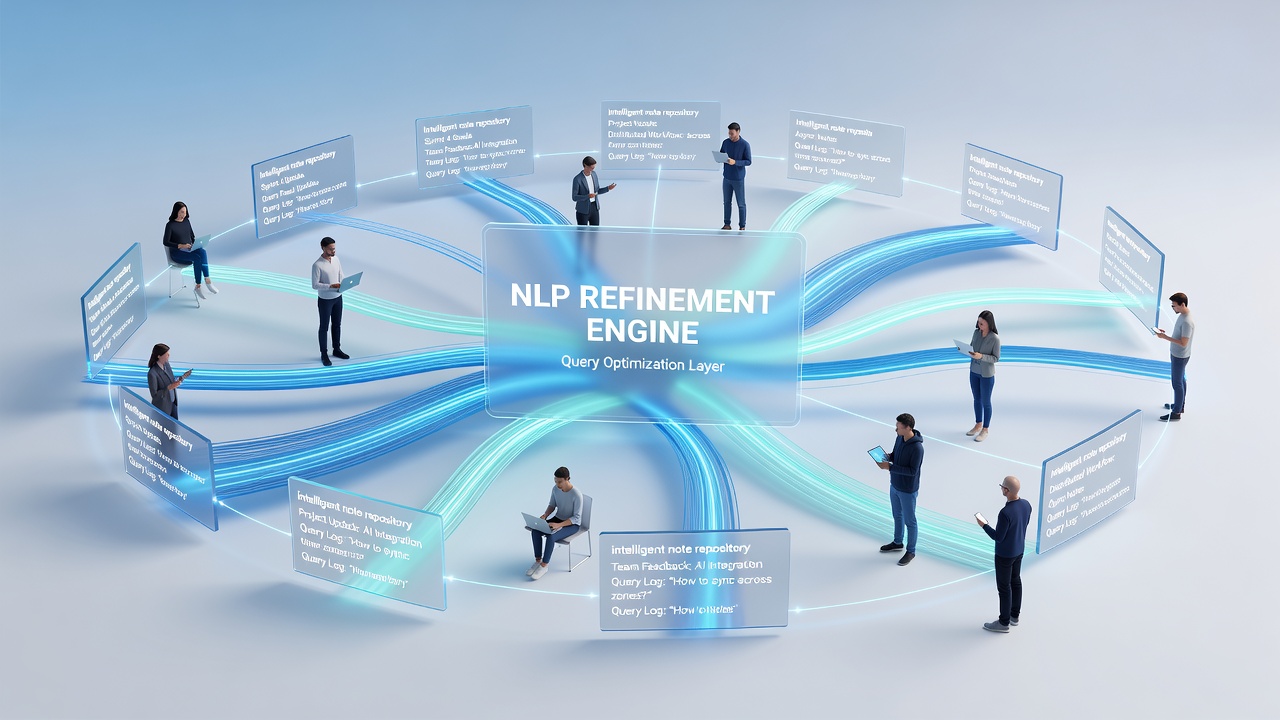
Intelligent note repositories have become central tools for distributed teams that need to manage growing volumes of information across time zones and locations, and natural language processing plays a direct role in refining how queries interact with those systems. Researchers have documented that NLP techniques parse user inputs in context, match them against stored content through semantic understanding rather than keyword matching alone, and return results that reflect intent even when phrasing varies. Studies from institutions in multiple regions show these capabilities reduce the time teams spend searching for notes while improving accuracy in retrieval across shared workspaces.
Core Mechanisms of NLP in Query Refinement
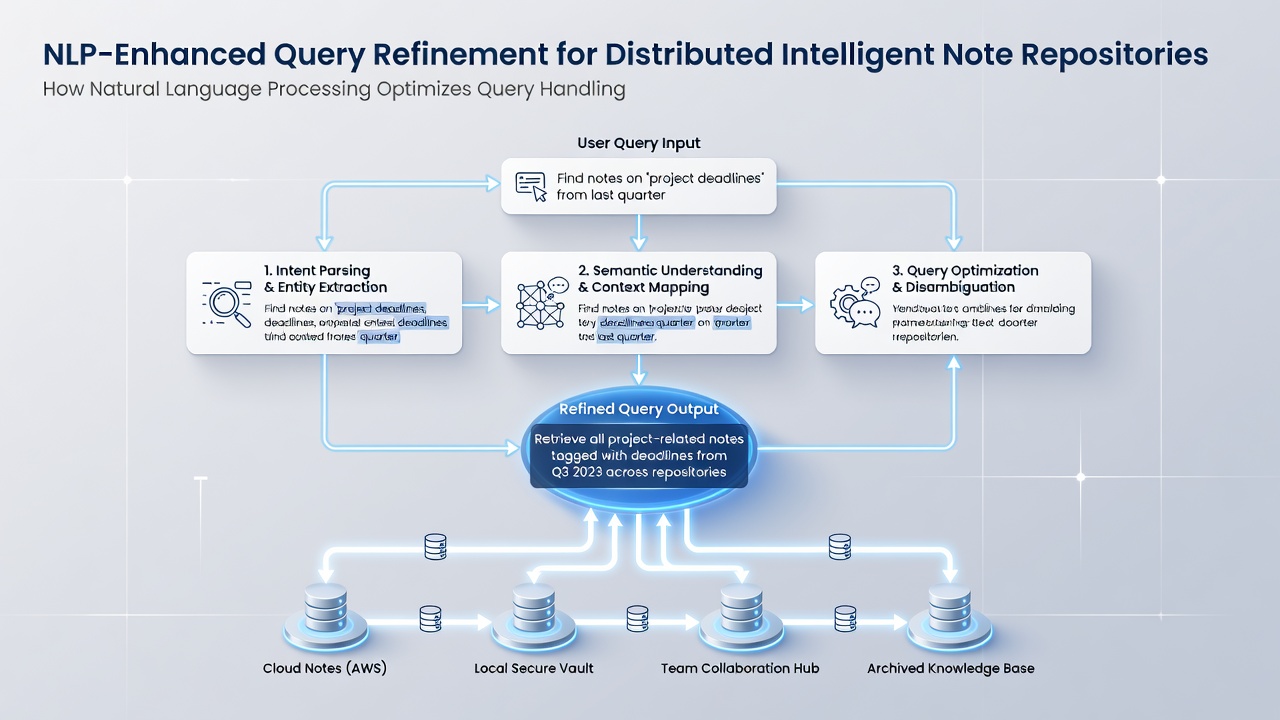
Query handling begins when a team member enters a natural language request into the repository interface, at which point tokenization and part-of-speech tagging break the input into structured components that algorithms can process further. Named entity recognition identifies specific references such as project names or dates, while dependency parsing maps relationships between words so the system understands whether a query asks for a document or seeks information contained inside it. Vector embeddings then convert both the query and stored notes into numerical representations that allow similarity calculations to surface relevant passages, and this process operates continuously as new notes enter the repository.
Contextual models trained on domain-specific data allow the system to interpret abbreviations and technical terms common within particular industries, which means a query about quarterly metrics returns financial summaries rather than unrelated calendar entries. Researchers at Canadian universities have published findings indicating that embedding models fine-tuned on enterprise corpora achieve higher precision than general-purpose versions when applied to note repositories used by remote engineering teams.
Adaptations for Distributed Team Environments
Distributed teams generate notes at irregular intervals and in multiple languages or dialects, yet NLP systems handle these variations by applying multilingual embeddings and real-time language detection that route queries to the appropriate content clusters. Access controls integrate with query processing so results respect permission levels without requiring users to add extra filters, and this combination keeps collaboration fluid when members work from different regions. Data from European research consortia reveals that repositories employing these layered NLP approaches record fewer duplicate queries because initial results already satisfy most information needs.
October 2026 brought updates to several major platforms that incorporated reinforcement learning from user feedback, allowing the models to adjust ranking weights based on which results team members actually opened and edited. These refinements operate in the background, continuously improving performance without requiring manual configuration from administrators.
Integration with Existing Workflows and Tools
Many organizations connect their note repositories to communication platforms and project management systems, and NLP query handling extends across these integrations by recognizing references to external tasks or conversations. When a user asks about a client discussion from last month, the system can surface both internal notes and linked meeting transcripts while preserving the original context. Industry reports from Australian technology institutes document measurable decreases in context-switching time when teams rely on unified NLP-driven search rather than separate application queries.
Security considerations receive attention through differential privacy techniques that protect sensitive information during model training, and audit logs track which queries triggered access to particular notes. Government guidelines from the United States emphasize transparent handling of training data in AI systems used for enterprise knowledge management, which has prompted vendors to publish summaries of their data sources and model update schedules.
Performance Metrics and Observed Outcomes
Organizations tracking repository usage report that average query resolution time drops after NLP implementation, with some distributed teams documenting reductions from several minutes to under thirty seconds per search. Precision and recall measurements improve when systems apply query expansion that automatically includes synonyms and related concepts identified through knowledge graphs. One study conducted across multiple continents found that teams using semantic search features accessed notes 40 percent more frequently than those limited to keyword methods, suggesting greater overall utilization of stored institutional knowledge.
Edge cases such as ambiguous queries trigger clarification prompts generated by the NLP layer, which presents suggested refinements rather than forcing users to reformulate requests from scratch. This interactive approach draws from conversational AI research and has been adopted by platforms serving global nonprofits and research collaborations.
Conclusion
NLP continues to shape how distributed teams extract value from intelligent note repositories by converting unstructured inputs into precise, context-aware results. As models incorporate ongoing feedback and expand language coverage, query handling becomes more reliable across varied work patterns. Teams that adopt these systems gain consistent access to information regardless of location or note volume, and the underlying techniques remain grounded in measurable improvements documented by research groups worldwide.