Logan Reed · 29 September 2026
Unlocking Efficiency Gains from Semantic Search Capabilities in Advanced Note Organization Platforms
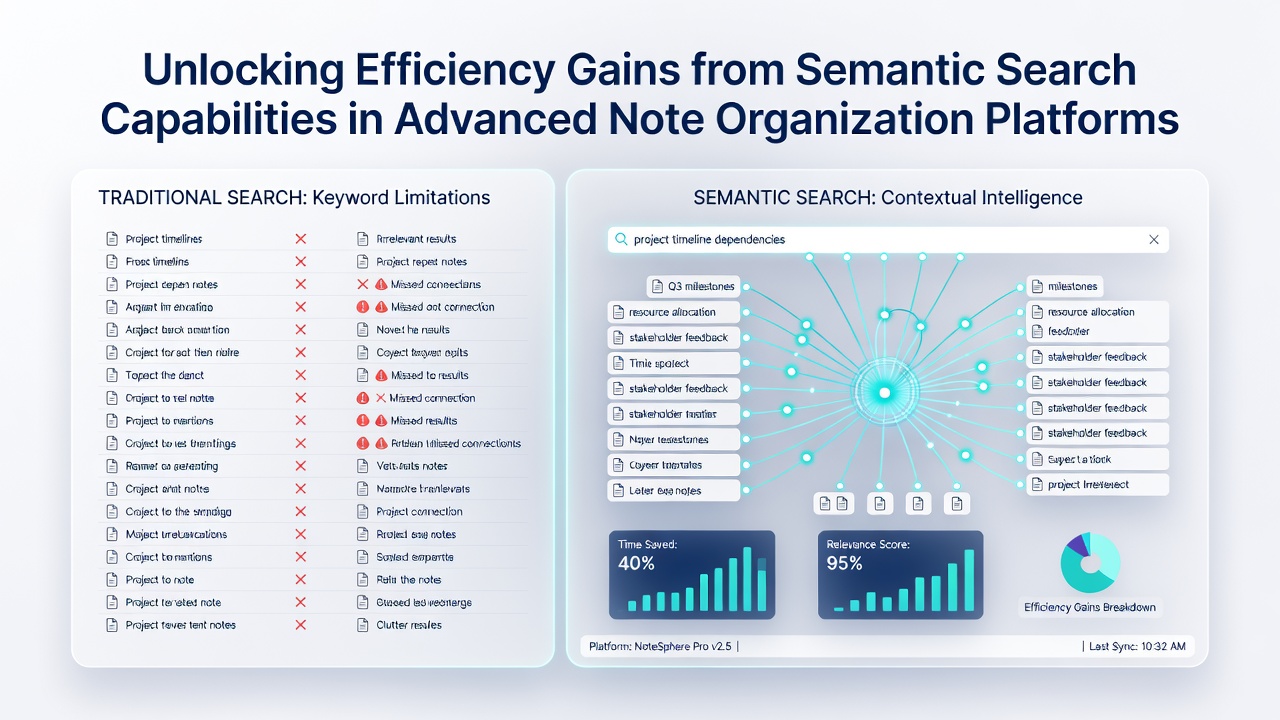
Advanced note organization platforms now integrate semantic search tools that interpret meaning rather than matching exact keywords, and this shift has altered how users retrieve and connect information across large collections of notes. Research from institutions in multiple regions shows measurable reductions in time spent locating relevant content when these systems replace traditional keyword indexes. Data from productivity studies conducted through 2025 indicate average search completion times dropping by 30 to 40 percent in environments that adopted vector-based embeddings and contextual ranking models.
Core Mechanisms Behind Semantic Search in Note Platforms
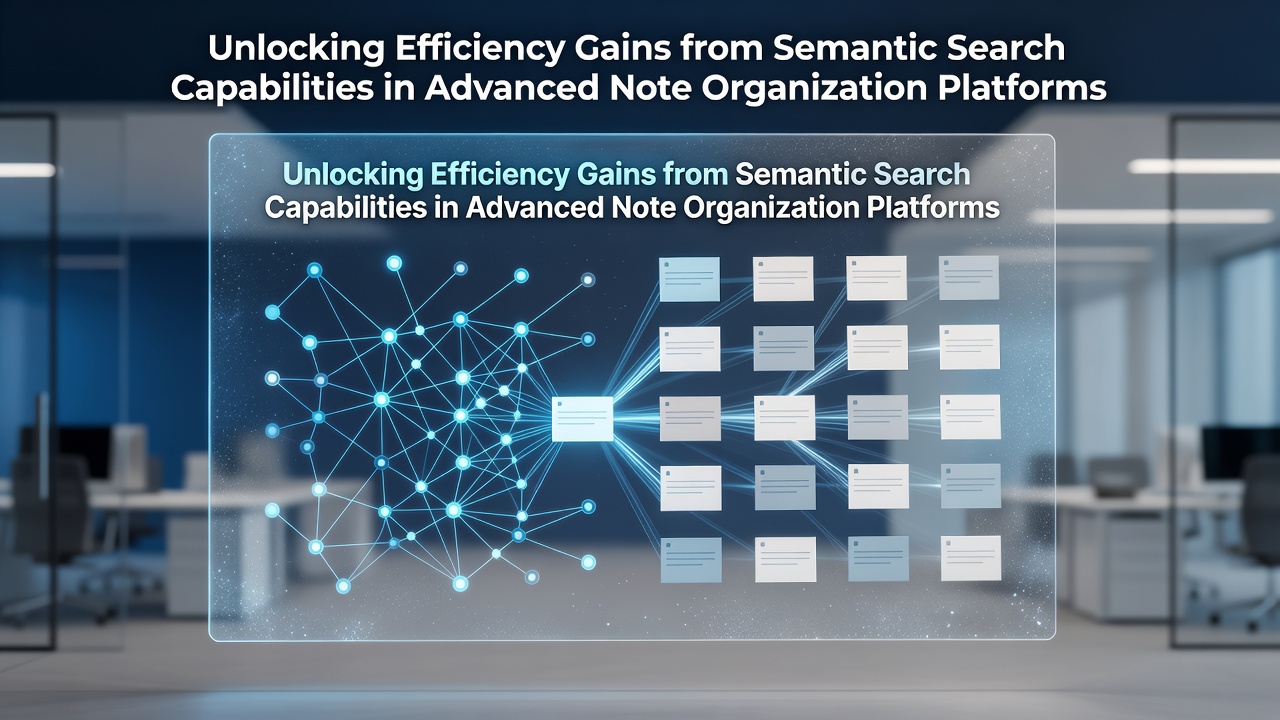
Semantic search relies on natural language processing models that convert text into dense vector representations, allowing platforms to surface notes with similar conceptual content even when phrasing differs significantly. Observers note that transformer architectures trained on domain-specific corpora improve accuracy when handling technical, academic, or project-based material common in professional note collections. These models process queries by analyzing surrounding context, entity relationships, and latent topics instead of relying solely on term frequency metrics.
Implementation typically involves embedding generation at ingestion time, followed by approximate nearest neighbor indexing that supports rapid retrieval at scale. Platforms combine this with metadata filters and user-defined tags to refine results without forcing users back into rigid folder hierarchies. Studies conducted by research groups in Canada and Australia reveal that hybrid approaches combining semantic vectors with graph-based relationship mapping further reduce duplicate retrievals and surface previously overlooked connections between related entries.
Documented Efficiency Improvements Across User Groups
Teams managing research repositories or compliance documentation report fewer instances of redundant note creation once semantic retrieval surfaces existing material during initial drafting stages. Figures released by the Australian Bureau of Statistics on workplace digital tool adoption show organizations deploying semantic note systems experienced measurable declines in average document recreation rates during 2024 and early 2025. Knowledge workers handling multilingual content particularly benefit because semantic models trained across languages maintain conceptual alignment without requiring manual translation layers.
One longitudinal analysis tracked users before and after platform upgrades that introduced semantic capabilities, revealing sustained reductions in weekly search-related interruptions. The same study found that retrieval accuracy improved most noticeably for queries involving abstract concepts or evolving project terminology, areas where keyword systems historically underperformed. Integration with calendar and task data inside certain platforms adds temporal context, allowing results to prioritize notes created or referenced during relevant time windows.
Technical Considerations for Platform Selection and Deployment
Organizations evaluating these platforms examine embedding model size, update frequency, and on-device versus cloud processing options because latency and privacy constraints vary by industry. Research papers from European academic centers emphasize the importance of differential privacy techniques when semantic indexes process sensitive internal documentation. Deployment timelines often align with broader digital transformation initiatives, and several enterprises scheduled major rollouts to coincide with infrastructure reviews planned for September 2026.
Scalability testing demonstrates that modern vector databases maintain sub-second response times even when note collections exceed several million entries. Administrators configure re-indexing schedules to incorporate new notes without degrading performance for existing users. Cost models differ across vendors, with some charging based on embedding storage volume and others tying fees to query volume or active user counts.
Integration Patterns With Existing Workflows
Semantic search functions integrate most effectively when platforms expose APIs that allow third-party tools to submit contextual queries directly. Development teams embed these calls inside custom dashboards that surface relevant notes alongside code repositories or design files. Data from industry reports compiled across North American and Asian markets show increased adoption of such integrations in software engineering and product management environments where cross-referencing requirements grow rapidly during release cycles.
Training periods for new users shorten because natural language queries require less precise syntax than older Boolean or tag-based systems. Platform vendors now include query suggestion features that adapt based on individual search history and note content patterns, further accelerating proficiency. Observers tracking enterprise software usage note that consistent semantic performance across desktop, mobile, and web clients remains a decisive factor during procurement evaluations.
Conclusion
Semantic search capabilities continue to reshape retrieval patterns inside advanced note organization platforms by replacing exact-match limitations with contextual understanding. Evidence gathered from productivity analyses and technical evaluations indicates consistent time savings and improved discovery rates when organizations implement these features thoughtfully. As platforms refine embedding techniques and expand integration options ahead of infrastructure updates scheduled for September 2026, the efficiency gains observed in current deployments provide a baseline for measuring future progress across diverse user communities.